
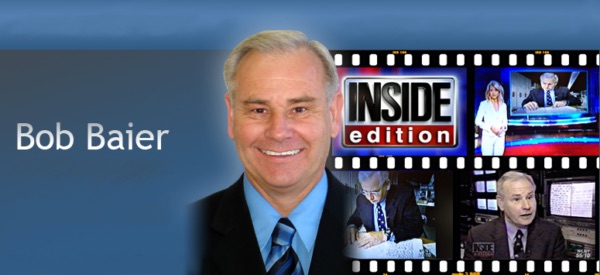
Listen to an article about Robert Baier, the “Document Whisperer” (below). Robert Baier is a highly regarded forensic handwriting expert from Warwick. January 23rd, is recognized as National Handwriting Day, largely due to John Hancock’s famous signature. Often called the “Document whisperer,” Baier has extensive experience, having analyzed over 30,000 documents across 1450 cases. He is a certified law enforcement instructor and trains officials nationwide and even internationally for the Jamaican Constabulary Force. Baier’s expertise is frequently sought in court as an expert witness and he has been featured on television programs. His work primarily involves addressing issues of forgery in various documents, including wills and checks, and he is also an author.
Bob Baier: Forensic Handwriting and Document Examination Expert
Bob Baier is an experienced forensic document examiner specializing in the examination and analysis of handwriting, signatures, and questioned documents. Through his professional practice, Baier provides objective, scientifically based examinations designed to help attorneys, individuals, businesses, and other clients determine the authenticity and authorship of disputed documents.
Forensic handwriting examination can play an important role when the validity of a signature or handwritten document is questioned. Baier examines the individual characteristics present in handwriting and signatures, comparing questioned material with known writing samples to determine whether there are significant similarities, differences, or indications of alteration or simulation. His work can assist in matters involving suspected forgery, disputed signatures, contracts, checks, wills, estates, business records, and other documents where authenticity is at issue.
As a forensic document examiner, Baier approaches each examination independently and objectively. Rather than relying on subjective impressions, forensic document analysis involves the systematic evaluation of writing characteristics, including letter formation, proportions, spacing, connecting strokes, line quality, writing movement, and other features that can distinguish one writer from another.
Baier’s expertise can be particularly valuable when a disputed document may have significant financial, legal, or personal consequences. His examinations can provide attorneys and their clients with professional analysis to help them understand the evidence surrounding a questioned signature or document.
Whether retained for litigation, a private investigation, an estate or probate matter, or another situation involving questioned handwriting, Bob Baier provides specialized forensic document examination services focused on careful analysis, professional reporting, and clearly communicating his findings.
Here’s a summary of his background and reputation:
Professional Background
- Certified Forensic Document Examiner with over 1,600 cases
- Regularly serves as an expert witness in court cases involving questioned documents.
- Known for his meticulous analysis and testimony in both civil and criminal matters.
Professional Affiliations
- Member of reputable organizations such as:
- International Association of Document Examiners (IADE)
- Scientific Association of Forensic Examiners (SAFE)
Reputation
- Widely respected in the forensic community.
- Has been consulted by media outlets and has published many articles in the field.
- His opinions are often considered highly credible in legal settings.
Conclusion
Robert Baier has a strong and established reputation in the field of handwriting analysis. He is often regarded as one of the top experts in the United States, especially when it comes to forensic document examination. If you’re considering his opinion or services, he would be a highly credible and experienced choice.
Forensic handwriting analysis, particularly when conducted by an expert like Robert Baier, can be a powerful tool in protecting clients from various forms of fraud, including electronic fraud and identity theft, by verifying authenticity and detecting forgery. Here’s how:
1. Detecting Forged Signatures
- Application: On physical contracts, checks, wills, or authorizations.
- Benefit: Forensic examiners can determine if a signature was copied, traced, or simulated, which is often used in fraudulent transactions.
2. Verifying Authorship
- Application: In cases where someone denies writing a document or message—emails, handwritten notes, or scanned documents.
- Benefit: Experts can identify natural writing patterns that are extremely difficult for impostors to replicate.
3. Authenticating Scanned or Digitized Signatures
- Application: In e-signature disputes or when a signature is copied and pasted onto electronic documents.
- Benefit: Analysts can compare the digital version to verified originals to check for:
- Inconsistencies in line quality
- Signs of image manipulation
- Anomalies in signature placement
4. Investigating Fraudulent Identity Claims
- Application: In identity theft cases where someone uses another’s name to open accounts or sign agreements.
- Benefit: Handwriting analysis can:
- Disprove that a victim signed or wrote a disputed document.
- Support the victim’s claim in legal or insurance proceedings.
5. Supporting Cybercrime Investigations
- Application: Handwritten notes, labels, or envelopes connected to online fraud or phishing schemes.
- Benefit: Analysts can link handwriting to specific suspects, often helping law enforcement trace back cybercriminals using physical evidence.
Limitations and Complementary Methods
- Handwriting analysis cannot analyze typed digital content (e.g., emails or typed contracts).
- It’s most effective when used in combination with:
- Digital forensic tools
- IP address tracking
- Metadata analysis
- Biometric signature verification systems
Real-World Scenario
Suppose a victim finds their signature on a loan document they never signed. A forensic document examiner can:
- Compare that signature to known, verified examples.
- Determine if it was forged.
- Provide expert testimony in court, helping the victim reverse fraudulent charges or clear their record.